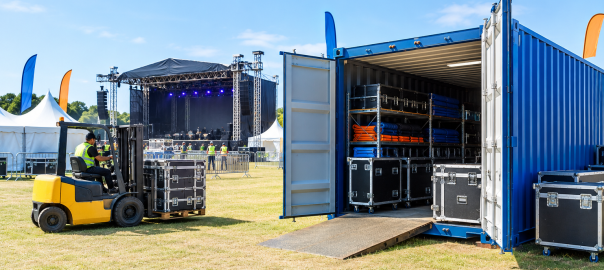
Bump-in day at a festival or expo rarely goes to plan. Staging turns up from one supplier, bar stock from another and merchandise from a third, and all of it needs somewhere dry and lockable to sit until the gates open.
A shipping container sorts that out in one move. It arrives on site already loaded, stays put as a secure store for the length of the event, then leaves loaded once you pack down.
Event freight is a big part of what we do at Moving Containers, alongside container transport, hire and storage spanning 21 depots around Australia. Below, we cover why containers suit events, which sizes fit which jobs, and how to use them for temporary storage before and after the big day.
Why event organisers rely on containers
Most event gear spends more time sitting still than travelling. A container suits that pattern, because the same steel box is built to ride on a truck or rail wagon and to sit outdoors in the weather with its doors locked.
That cuts out double handling. Instead of unloading a truck into a marquee and reloading it on the last night, your crew packs once at the warehouse and unpacks once on site. Over a three-day field day, or a tour across several venues, those saved hours add up.
Security is the other big win. A locked container is a much harder target overnight than a tent full of sound gear or stock, and it keeps everything out of the rain.
We see this across music festivals, agricultural shows and field days, sporting grand finals, corporate expos, product launches and emergency response deployments. Each site is different, so we plan around the event rather than following a fixed template.
Choosing the right container for your event
The right size comes down to what you’re storing and how much room the site gives you. Our range of shipping container sizes runs from 10ft through to 40ft, and these are the ones event clients use most.
A standard 20ft unit is about 6 metres long, so it fits behind most stages and in most back-of-house areas. If space is tight, two 20ft units are often easier to place than one 40ft.
Refrigerated containers are worth planning early for summer events. Every reefer we supply is regularly serviced and monitored, so drinks and catering stock hold temperature through transport and on-site.
Turning a container into part of the event
A container doesn’t have to hide behind the back-of-house fence. Our in-house design team and tradespeople have turned containers into pop-up shops, bar lounges and display centres, then branded the outside so the unit arrives ready to represent your event or activation.
For touring brands, a shipping container built this way is the stall, the storeroom and the freight unit all at once. Because the design and fit-out happen in-house, tight deadlines and short turnarounds are easier to meet.
On roadshows, we also move staging and audio-visual equipment as freight alongside your containers and coordinate the schedule between cities, so the whole kit turns up at each venue together.
Temporary storage before, during and after the event
Storage is where containers quietly earn their keep. During a multi-day event, a container on site holds equipment, stock and merchandise overnight. Short-term hire covers the load-in and pack-down period, and the container goes back once the event wraps up.
Between events, your gear can stay packed in a container at one of our depots instead of a rented warehouse. When the next show comes around, we deliver it straight to the venue, which saves unloading and reloading for every leg of a tour.
The same idea works well beyond events. Builders use a lockable shipping container as a site store, households use one during renovations or a move between homes, and businesses use them for seasonal stock. A hire can run for a few weeks or several months.
Site and booking tips that save headaches
Most container problems at events start before the truck arrives. A little planning avoids nearly all of them.
- Check access early. Measure gate widths, look up for power lines and overhanging trees, and pick a firm, level spot. Soft ground after rain catches out plenty of outdoor venues.
- Ask about permits. If the container will sit on a road, footpath or council land, check with the local council first, since rules differ from one council to the next.
- Book ahead of peak season. Spring and summer are busy for outdoor events, and December fills up fast. If plans change late, our depots can handle late bookings and emergency transport requests.
- Plan the pack-down as carefully as the bump-in. Label what goes where, so each container leaves in the order the next site needs it.
- Pick road or rail for interstate legs. We move containers by both, depending on the route and how much time you have.
Plan your event containers with us
From a single 20ft store at a country show to a fleet of branded units on a national roadshow, Moving Containers handles the transport, hire and storage under one roof. Tell us your dates, site and gear list, and we’ll recommend the right shipping container setup. Contact our team online or call 1300 588 115 for a quote.
Frequently asked questions
Can I hire a shipping container just for the length of an event?
Yes. Moving Containers offers short-term container hire that covers the load-in and pack-down period, with the container collected once the event wraps up. It suits festivals, expos, field days and sporting events, and doubles as lockable on-site storage for equipment, stock and merchandise while the event runs.
What size container do I need for event equipment?
A 20ft general purpose container suits most event loads, such as furniture, smaller staging and stock. A 40ft high cube suits bulky AV rigs and large staging, while a 10ft unit works as a small merchandise store on a tight site. Moving Containers can recommend a size once you outline your gear.
Can I keep food and drinks cold at an outdoor event?
Yes. A refrigerated container, or reefer, holds a set temperature for catering supplies, drinks and other perishables. Moving Containers supplies refrigerated containers from 20ft to 40ft, and each reefer is regularly serviced and monitored, so temperature control stays reliable through transport and on-site storage at the event.
Where can I store event gear between shows?
Moving Containers provides short and long-term container storage at 21 depots across Australia. Event equipment can stay packed in a container at a depot between shows, then be delivered to the next venue when needed. That saves unloading into a warehouse and reloading for every leg of a tour.
